Friday, May 6, 2011

Module 6 - The Very Hungry Caterpillar

Summary:

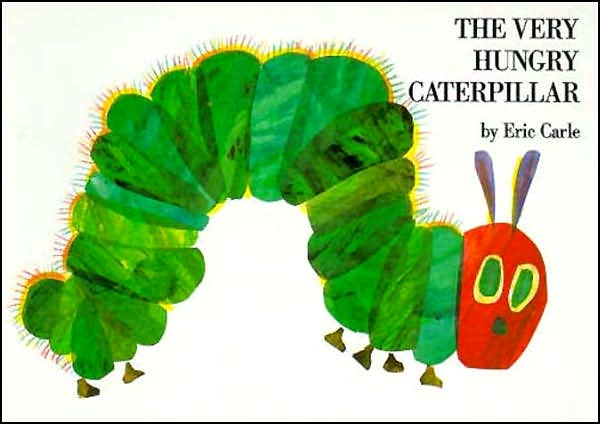
The Very Hungry Caterpillar by Eric Carle tells the story of how a caterpillar eats for 2 weeks and at the end of the story he goes to sleep and wakes up looking very different.  The colors in the book are vibrant and create an eye catching story for young ones just learning about books, shapes, numbers and colors.

Bibiliography:

Carle, Eric. "The Very Hungry Caterpillar". Penguin Group, 1994.

My Impressions:

I found this book to be fun to read with young children, the art work is bright and the use of mixed media gives the pictures a depth than just a ink illustration would have given.  The use of a white pages adds to the brillance of the pictures. 

Reviews:

Publishers Weekly


In honor of the 40th anniversary of Eric Carle's The Very Hungry Caterpillar comes the first-ever pop-up edition of this book. When the familiar, tiny caterpillar pops out of his egg, a dial lets readers help him chug across Carle's earthy color palette. Next, the caterpillar eats his way through a week's worth of pop-up fruit, as well as a full-page display of sweet and savory treats, (resulting in a stomach-ache), before his eventual transition into a butterfly. The pop-ups, particularly a half-cylinder tree trunk that sprouts from the center of the spread and a large accordionlike cocoon, are well executed and engaging. While the prominent use of white space lends a sparser feel than in the picture book, the shimmering wings of the pop-up butterfly dazzle on the final spread. Ages 3-up. (Mar.)

Copyright © Reed Business Information, a division of Reed Elsevier Inc. All rights reserved

Suggested Use:

Used during pre-K and up for storytelling and introducing reading and books to small children.  Can be used as part of a display for spring and the changes that nature goes through by the seasons.

Book Cover:

Cover Image

Module 1 - The Giving Tree

Summary:

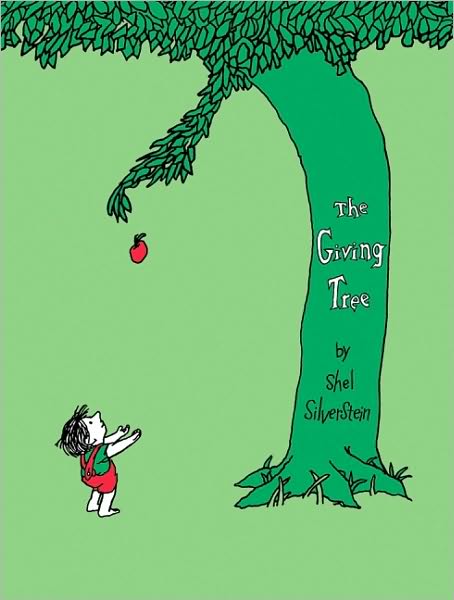
The Giving Tree by Shel Sivlerstein is about a boy and a tree who grow up and grow old together.  For every stage of his life the tree gives to the boy. For instance as a young boy he provided shade and a swing, as he grows older the boy brings his girl to the tree and carves into the tree, he needs a wood for a home, etc. 

Bibliography:

Silverstein, Shel. "The Giving Tree".  Harper Collins Publishers, 1996.

My Impressions:

This is a sweet book about a tree who gives until he has nothing left to give to the boy.  I love the illustrations of Shel Silverstein and his books in general.

Reviews:

From the Publisher


'Once there was a tree...and she loved a little boy.'

So begins a story of unforgettable perception, beautifully written and illustrated by the gifted and versatile Shel Silverstein.

Every day the boy would come to the tree to eat her apples, swing from her branches, or slide down her trunk...and the tree was happy. But as the boy grew older he began to want more from the tree, and the tree gave and gave and gave.

This is a tender story, touched with sadness, aglow with consolation. Shel Silverstein has created a moving parable for readers of all ages that offers an affecting interpretation of the gift of giving and a serene acceptance of another's capacity to love in return.

Ages 10+

Suggested Use:

For science as a way that nature provides for the needs of everyone until the end.  Great example of nature vs. man.

Book Cover:

Cover Image

Module 7 - Truth with a Capital T

Summary:

The story of Maebelle T. Eberlee and her cousin Isaak, who is also African-American come to Georgia to spend the summer with their grandparents.  Everyone has a secret, but not as big as the one that Maebelle T is hiding from her family.  Maebelle T and Isaak set out to discover the family secret and in the end she becomes closer to Isaak that she ever thought.  This book is about growing up in the north and the south, understanding the differences and overcoming secrets.

Bibliography:

Hegedus, Bethany. "Truth with a Capital T". Random House Children's Books, 2010.

My Impressions:

This was a fun book to read, it was fast moving and I enjoyed the humor that Bethany Hegedus included in the book.  I also enjoyed reading about the family and friend dynamics throughouth the story. 

Reviews:

School Library Journal


Gr 4 6—Eleven-year-old Maebelle is excited about spending the summer in rural Georgia with her grandparents, who are country music singers, until she discovers that her adopted African-American cousin, Isaac, who is a 10-year-old trumpet prodigy, has also been invited. Maebelle's grandparents have inherited a home from an eccentric aunt who locked one wing of the house to hide a family secret. Maebelle desperately wants to uncover the mystery but is strictly forbidden to enter the area. The story begins slowly as the cousins vie for their grandparents' attention and play with friends and neighbors. The last few chapters reveal the secret, which is connected to the original owners of the house, their slaves, and the Underground Railroad. The real story isn't so much the mystery but the two very different cousins learning to get along and appreciate one another. The children are fairly well developed, and the grandparents are believable. However, the author has tried to make the characters sound Southern in their speech, but has done it in a way that detracts from the story rather than enhancing it.—Nancy P. Reeder, Heathwood Hall Episcopal School, Columbia, SC

Suggested Use:

This is a great book for families that are blended and sorting out their differences. 

Book Cover:

Cover Image

Module 7 - The Sisterhood of the Traveling Pants

Summary:

This is the story of 4 friends, Carmen, Tibby, Lena and Bridget and a pair of magical pants that fit them all perfectly and the story of friendships that survive separation and all the angst of growing up. 

Bibiliography:

Brashares, Ann. "The Sisterhood of the Traveling Pants". Random House Children's Books, 2002.

My Impressions:

This was a fun read and I actually read the series to find out what happens to the girls and their friendships.  I enjoyed the way that each one lives reflected back to their friendships and how they came to rely on each other when times were tough.  Good for young girls who are coming of age and have strong friendships.  I think that this series is very relatable to young girls around the 8th grade and up.

Reviews:

School Library Journal


Gr 9 Up-During their 15th summer, four girls who have been lifelong friends spend the season apart. In a summer's launch ceremony, they decide to pass along among themselves a pair of thrift shop jeans which oddly seems to fit each of them, although Carmen, Tibby, Bridget, and Lena have very different physiques. Ann Bashares' novel (Delacorte 2001) uses this conceit to travel among the friends' four very different geographic locations, experiences, and self-realizations, making for a complex story in which each girl's voice is distinct both in text and in actress Angela Gothals' reading. Lena spends the summer in Greece, visiting her grandparents and gaining the courage to act instead of always observing quietly; Bridget attends soccer camp in Mexico and makes a dangerous game of flirting with a college-age counselor; Carmen has planned to spend the summer with her father but discovers, upon arriving in South Carolina, that he is about to remarry a woman who has two teens of her own; Tibby stays home in Washington, DC, working at a drugstore, and unexpectedly becomes friends with a 12-year-old girl who has leukemia. Each girl pushes the emotional limits of both herself and those around her. While the traveling pants themselves seem rather artificial, these emotions and the developments they inspire in the individuals and in their relationships ring absolutely true. The recorded version of this book makes it flow more easily than its print counterpart, due to Gothals' care in individuating every character's pitch and rhythm while remaining faithful to Brashares' words and the important pauses between passages.-Francisca Goldsmith, Berkeley Public Library, CA Copyright 2001 Cahners Business Information.

Kirkus Reviews

In this feel-good novel with substance, four teenage girls, friends since they were all born just weeks apart, are about to embark on their first summer as separate young women. Carmen, half-Hispanic, has a knack for math; Lena, the beauty of the group and self-conscious about her appearance, demonstrates artistic talent; Bridget is the tall soccer star; and Tibby, the rebel, sports a nose ring. Visiting grandparents for the first time in Greece, attending soccer camp in Mexico, spending the summer with dad in South Carolina, or working at home, how will these girls survive their time alone? Leave it to a pair of secondhand jeans, which, despite their various body shapes, fits all four perfectly. These magical jeans, dubbed the Traveling Pants, span the world, one week at a time, lending their mystical powers wherever they go. The pants become a metaphor for the young women finding their own strength in the face of new love, unexpected friendships and death, a father's remarriage, and a reckless relationship-and without their best friends. Debut novelist Brashares renders each girl individual and lovable in her own right, emphasizing growing up without growing apart. Move over, Ya Ya Sisters. (Fiction. YA)

Suggested Use:

This would be a good book/series for a young girls reading club and discussion about growing  up and coming of age. 
Book Cover:

Cover Image

Thursday, May 5, 2011

Module 15 - The Absolutely True Diary of a Part-Time Indian

Summary:

The Absolutely True Diary of a Part-Time Indian by Sherman Alexie is the story of Arnold Spirit, a Native American, who is growing up on the Spokane Indian Reservation.  Arnold was born with "water on the brain" and is fragile growing up, but by the time he makes it to high school he is the butt of jokes and bullies.  He is a 14 year old Indian who decides to leave the rez to get a better education and to become something.  In his short live he loses the people loves the most to tragedies related to alcohol.  When he goes to an all-white school he becomes a "part-time" indian and must learn to live in both worlds.

Bibliography:

Alexie, Sherman.  "The Absolutely True Diary of a Part-Time Indian". Hachette Group, New York. 2007.

My Impressions:

I loved this story of Arnold Spirit and how he must overcome his history and the history of his tribe and Native Americans and escape from the rez.  He is born with health issues that he overcomes and becomes a popular student at an all-white school.  This is probably my most favorite book from all the readings that I had this summer.  I found the humor and story so touching that it broke my heart and made me laugh at the same time.  This is a great book for kids are considered geeks or nerdy.

Reviews:
THE ABSOLUTELY TRUE DIARY OF A PART-TIME INDIAN


Sherman Alexie

When was the last time a book not only made you a little bit nauseous but excited as well? The National Book Award-winning novel THE ABSOLUTELY TRUE DIARY OF A PART-TIME INDIAN by Sherman Alexie is such a magnanimous stew of reality and hope --- and the particular traumatic existence of a reservation teen in contemporary America --- that you can't possibly put it down, no matter how sad, disgusted or freaked out it makes you.

In much the same way that S.E. Hinton's THE OUTSIDERS defined that wrong-side-of-the-tracks world for word-loving ’70s preteen bookgeeks (of which I was one), this novel will challenge and define a new world for today's readers. Based on Alexie’s actual life experiences, it has certainly gained him many new admirers since its hardcover release in 2007.

THE ABSOLUTELY TRUE DIARY OF A PART-TIME INDIAN begins with Junior's everyday travails. Born with water on the brain, he suffers a rash of difficult and painful physical traumas daily. Bright and filled with ideas and artistic ability, Arnold Spirit (Junior's beautiful true name) --- the son of an alcoholic and a long-suffering mom --- decides to take a chance, get off the "rez" and attend a white private school in Rearden, Washington (just like Alexie himself did). To his surprise, he leaves the world of bullies and bullying behind him and encounters new friends who share some of his interests. His basketball team meets up with his old classmates on the court, and a battle of both bodies and cultures begins.

Junior’s remarkable ability to weather even the worst personal storms (death, hunger, a questioning of his identity and his tribe) makes this an uplifting yet very emotional reading experience. Also, the drawings by Ellen Forney remind me of a teen's combination of the work of Ralph Steadman and any MAD magazine cartoonist; they add a further, descriptive dimension to Junior's persona and are a great accompaniment to Alexie's forthright words and dramatic incidents. By the end of the book, you are entirely inside Junior's oversized head. I found it hard to shake him, his world and his travails when I turned the last page.

There is something in the force of Alexie's description that captures your heart, even while some of his raunchiest statements can turn your stomach. Boys of this age will be boys of this age, regardless of race or economic class. There is much to recommend here, but one word of warning: sex and violence rear their ugly heads as much as deep and unabiding sorrow and great flowering words of encouragement. This is a book that delves into every possible aspect of one boy's adolescent wanderings. The fact that Alexie actually encountered such incidents in real life only serves to make the narrative that much more imposing. Knowing that he fought a successful fight against all the things that oppressed him as a kid gives THE ABSOLUTELY TRUE DIARY OF A PART-TIME INDIAN even greater resonance. Hope is indeed the thing with feathers.

--- Reviewed by Jana Siciliano


Suggested Use:

For a social studies subject on the results of alcoholism, abuse and poverty that is particularly high in the Native American society; but also is part of everyone's life.

Also a good recommend for students who have similar things happening to them and can relate to what is happening and opening up a dialogue to discuss.

Book Cover:
The Absolutely True Diary of a Part-Time Indian

Module 4 - M. C. Higgins the Great

Summary:

M.C. Higgins the Great by Virginia Hamilton is the story of M.C. Higgins and his family who live on the side of Sarah's Mountain.  M.C. sits atop a 40 ft pole and can see his entire world from there.  He dreams about leaving, but longs to stay put.  He dreams for his mother and siblings, but he wonders if he can really leave.  As M.C. tries to keep his home being swallowed by the rubble caused by strip mining and he knows that he may someday leave the only home he has every known.

Bibliography:

Hamilton, Virginia.  "M.C. Higgins The Great." Simon & Schuster Children's Publishing, 1999.

My Impressions:

I did not like this book at all; it was hard to follow and seemed to be in too many pieces.  The bleakness of the character M.C.'s life was troubling to read.  His father loved him, but was brutal in the beatings that he gave to his son.  His mother was having the essence drained from her for working so hard to have nothing and then the rape of the mountain by strip mining left nothing to really look forward to.  In the end I actually gave up in trying to figure out what was going on in the story.

This story is better for 12 years and older children.

Reviews:

Anita Barnes Lowen - Children's Literature


M.C. Higgins and his family have lived on Sarah's Mountain for generations. His daddy says that one day it will belong to M.C. But the spoil heap (the pile of waste, or slag) that strip coal mining has left behind is slowly but inexorably creeping towards M.C.'s home. Maybe the "dude" who is collecting mountain voices and songs will make M.C.'s mama a star singer and the family will have to travel with her far away from their mountain home. Maybe Lurhetta Outlaw, the young teenage girl wandering alone in the woods, will be a catalyst for change. The characters in the story are best described by her: "You all are the strangest people." And indeed they are. There are the six-fingered witchy people said to possess unusual powers: M.C.'s daddy whose relationship with his son is cruel yet loving; and M.C. himself, who when he first spies Lurhetta on the wooded mountainside stalks and attacks her and finally establishes a cautious friendship. The author paints a rich picture of the life of a teenage boy who is desperately trying to hold on to his traditions, "as well as his dreams for the future." It will take a strong and motivated reader to follow the plot through the three-day detail-filled story of M.C.'s attempt to save his home and his family from disaster. Award-winning and considered a classic 25 years after its publication, this book belongs on library shelves. 2002 (orig. 1974), Aladdin Paperbacks/Simon & Schuster, Ages 12 up.

Suggested Use:
 
As part of a science reading to show the pollution of strip mining does to the earth. 
 
Book Cover:
 
Cover Image

Module 4 - The Graveyard Book

Summary:

The Graveyard Book by Neil Gaiman is about a boy Nobody "Bod" Owens whose family is murdered when he is 1 1/2 years old.  He ends up living in a very old cemetery and raised by ghosts and a guardian named Silas.  He must stay within the graveyard for his own safety from "the man named Jack" who will surely murder him too.  The story has many scary, funny, loving, sad and spooky elements to make the hair on your arms stand up.

Bibliography:

Gaiman, Neil.  "The Graveyard Book". HarperCollins Publishers, New York. 2008.

My Impressions:

This is another gem from the reading list.  The characters are believable and the story is intriguing to keep up late at night reading.  I love the spooky and eerie things that Bod does and I love the character of Silas, his guardian. I like how Neil Gaiman can change the use of words to reflect different centuries and uses modern day technology in telling of the "live" world.  But mostly I like how the emotions that Bod tries to understand and how touching he is when he says goodbye to those ghosts that he leaves behind. I think that this would be appropriate for children in the 4th grade and older.

Reviews:

The New York Times - Monica Edinger


The Graveyard Book, by turns exciting and witty, sinister and tender, shows Gaiman at the top of his form…The story's language and humor are sophisticated, but Gaiman respects his readers and trusts them to understand…In this novel of wonder, Neil Gaiman follows in the footsteps of long-ago storytellers, weaving a tale of unforgettable enchantment.

National Public Radio


“The invention of immortal folk who readers feel they might like to kick back with may be this prolific, tousle-haired, ex-pat British author’s contribution to world literature.”

Washington Post

“Like a bite of dark Halloween chocolate, this novel proves rich, bittersweet and very satisfying.”

Suggested Uses:

This is a great read aloud book and can be part of a Halloween display for older students.

Book Cover:

Cover Image

Monday, May 2, 2011

Module 5 - The Firefly Letters

Summary:

The Firefly Letters by Margarita Engle is the story of Fredrika Bremer who comes from Sweden in 1851 to live in Cuba.  She is a rich woman who is searching for peace and believes she has found in Cuba.  She befriends her maid, Cecilia, who misses Africa and Elena the daughter of a rich plantation owner.  They form a friendship that endures the unjustices that are found living in Cuba.

Bibliography:

Engle, Margarita.  "The Firefly Letters".  Henry Colt and Co., 2010.

My Impressions:

Another beautiful story on our reading list.  I found this to be a story of longing and lost innocence for all three characters.  I love the way that Margarita Engle writes and how they would wear fireflies in their hair for decorations.  The love and freindship that these share for each year is heartwarming and touching.

Reviews:

School Library Journal


Gr 8 Up—This engaging title documents 50-year-old Swedish suffragette and novelist Fredrika Bremer's three-month travels around Cuba in 1851. Based in the home of a wealthy sugar planter, Bremer journeys around the country with her host's teenaged slave Cecilia, who longs for her mother and home in the Congo. Elena, the planter's privileged 12-year-old daughter, begins to accompany them on their trips into the countryside. Both Elena and Cecilia are inspired by their guest's independence, Elena to wonder if she can avoid eventual marriage and Cecilia to dream of freedom for her unborn child. Using elegant free verse and alternating among each character's point of view, Engle offers powerful glimpses into Cuban life at that time. Along the way, she comments on slavery, the rights of women, and the stark contrast between Cuba's rich and poor. The author takes some license with the real Bremer's journey; Elena is fictional, which the author is careful to point out in her author's note. She also includes a reference list for readers who want to learn more about Bremer. The easily digestible, poetic narrative makes this a perfect choice for reluctant readers, students of the women's movement, those interested in Cuba, and teens with biography assignments.—Leah J. Sparks, formerly at Bowie Public Library, MD

Suggested Use:

Social studies subject on slavery and how it was not just in the south of the United States but in other countries as well.

Book Cover:
Cover Image

Module 5 - Ninth Ward

Summary:

Ninth Ward by Jewell Parker Rhodes is the story of 12 yr old Lanesha who is born with the "caul" or "the sight"  she sees many dead people, especially her mother who died at her birth.  She lives with 82 yr old Mama YaYa who is midwife and who can predict the future.  Lanesha and Mama YaYa live in the Ninth Ward of New Orleans and Hurricane Katrina is on her way to New Orleans.  Lanesha and Mama YaYa must get ready to face the worst storm in New Orleans history and to survive the aftermath of the levees breaking and flooding their beloved neighborhood.

Bibliography:

Rhodes, Jewell Parker.  "Ninth Ward".  Little, Brown Young Readers, 2010.

My Impressions:

I absolutely loved this story of love, strength, understanding, forgiveness and goodbyes.  This story described New Orleans, but captured the essence of the city before, during and after Katrina.  The writing provided visual pictures that dropped me into the storm and brought me back out.

Reviews:

School Library Journal


Gr 5–8—Communicating with ghosts, including the spirit of her mother who died giving birth to her, is a gift that Lanesha, 12, has had for as long as she can remember. The girl's beloved caretaker, Mama Ya-Ya, a midwife and healer, has a gift that allows her to predict the future. When she begins to sense that a big storm is coming to their much-loved New Orleans neighborhood, both she and Lanesha must trust in their senses and in one another to survive. Lanesha is a wonderful character who exudes resilience and fortitude in the face of a catastrophe as well as a personal vulnerability in terms of her status as an orphan and an outsider. Words, numbers, and colors as seen through her eyes show the magic and wonder that exist in everyday things. The unique writing style even allows the unlikely combination of elderly Mama Ya-Ya's heady scents of Vicks Vapor Rub and Evening in Paris perfume to seem wonderful and inviting. Although the outcome of Hurricane Katrina is known, the clever writing allows the unavoidable tragedy to unfold in such a haunting and suspenseful manner that the extreme sense of foreboding and ultimate destruction is personalized and unforgettable. Heartbreak and hope are reflected in Lanesha's story, which will capture even reluctant readers due to the inventive storytelling and the author's ability to bring history to life.—Margaret Auguste, Franklin Middle School, Somerset, NJ

Suggested Use:

I would use this book as part of the history of New Orleans and the people who make up the soul of the city.  It would also be used in studying the weather and what happens during and after a hurricane.

Book Cover:

Cover Image

Module 3 - Smoky Night

Summary:

Smoky Night was written by Eve Bunting  and illustrated by David Diaz is the story of a neighborhood that is in the middle of a race riot and the young boy, Daniel and his mother must leave their apartment along with others for safety.  As they search for safety they also learn that neighbors from different cultures are also afraid.  The bold illustrations and the use of mixed mediums created a story that was both dark but alive with fire.  The two created a story that was well illustrated to support each other.

Bibliography:

Bunting, Eve.  "Smoky Night". Houghton Mifflin and Harcourt, 1999.

My Impressions:

I loved this story of Daniel and his mother who learn that people of different cultures can share many of the same feelings.  It has an ending that is uplifting and the illustrations are both bold and dark without taking away from the story, but enhancing it.

Review:

Children's Literature


This book, the Caldecott Award winner for the year's finest illustrations, is a story of tolerance placed in the violent setting of the LA riots. The illustrations are collages that add intrigue and extend the story. Shattered glass surrounds a picture of looting; spilled multi-colored cereal accents items spilled from grocery store thieving; and plastic bags describe the senseless stealing from a dry cleaner. The young hero is confused by the chaos and frightened by fire, smashed glass, and his missing cat. His protective mother calmly explains every part of the night's madness. But it is the boy who is the agent of change when he notices how his cat has made friends with another cat; an enemy cat belonging to the Korean woman who owns the grocery down the street. The Korean woman, who had always seemed different and separate becomes a friend in the shelter during the smoky night. This book would be incredibly helpful for children who have shared the protagonist's experience. It is a meaningful book to talk about the violence that surrounds today's children. Unfortunately, I don't think its a book that will profoundly affect children over broad geographic areas or over time.

Children's Literature

Daniel and his mother are witnesses to urban riots. From his window, Daniel watches the dark streets in confusion as his mother tries to explain looting, mob anger, and neighborhood animosities. When fire makes them seek refuge in a shelter, a Korean neighbor becomes a real person and personal prejudice begins to heal. Diaz conveys the strong message by placing dramatic insets in his powerful collages.


Suggested Use:

As a story of cultural differences but similarities in fears and love is a solid story to show how people are not so different after all.  This is a great story to show how diverse people can still live in the same area and share the same feelings and understanding.

Book Cover:

Cover Image

Module 3 - Song of the Swallows

Summary:

Song of the Swallows by Leo Politi is about a young Latino boy named Juan who lives in San Capistrano and loves the swallows in the Mission garden.  He decides to create his own garden in hopes that when the swallows migrate back to California, they will also come to his garden.

Bibliography:

Politi, Leo. "Song of the Swallows". Getty Publications, 2009.

My Impressions:

The artistry of this book is pale and muted as compared to other children's books in Module 3 such as, Song and Dance Man by Karen Ackerman.  But what I like about this book is that the illustrations match the story.  I also like the flow of this story and found it to be soothing as I read it for myself and then for the young kids in my family.

Reviews:

Children's Literature Review: Originally published in 1948, Leo Politi's Caldecott-Medal-winning book tells a tale of los golondrinas, the swallows that travel to and from San Juan Capistrano in California. Juan, a young Latino boy, walks through the gardens of the Mission with Julian, the bell ringer. Julian teaches Juan about the travels of the swallows, and, together, they would watch the swallows fly away south and return in the spring on Saint Joseph's Day. Juan builds his own garden, determined to provide a home for los golondrinas when they return. The book includes two songs with musical notation and lyrics, one of which the people sing when the swallows leave and the other when they return. This charming, simple story tells of the patterns of nature, the Latino culture in California, and the beauty of song. The muted, warm colors of the illustration mimic the landscapes of Southern California. This timeless story has connected with children over the past 60 years and would be a beneficial addition to any children's literature collection.

Suggested Use:

This would be a storybook for small children because of the soft illustrations and smooth writing.  I also like it as a nature and science book on why birds migrate south and how they know when to leave and return.

Book Cover:

Wednesday, April 27, 2011

Module 2 - Peter's Chair

Summary:

Peter's Chair is about Peter who is upset that his parents have taken his furniture and are painting it pink for the new baby.  But Peter rescues his blue chair and runs away from home to save it. 

Bibliography:

Keats, Ezra Jack.  "Peter's Chair". Penguin Group, 1998.

My Impressions:

This is a wondefully sweet book about a young boy is about to receive a new baby and the changes that come with it.  The author/isllustrator Ezra Jack Keats provides a solid story with beautiful illustraions. 

Reviews:

Children's Literature


Peter is not pleased by the arrival of his new baby sister. Not only does she seem to infringe upon his noisy playtime, but his parents also have preempted his baby furniture for her use. And worse yet, they have painted it pink! When his favorite chair seems to be the next painting subject, Peter acts. Taking his chair, food and other beloved items, Peter runs away... to the front stoop. As Peter goes to sit down in his baby chair to think, he begins to understand what it means to be a big brother. This timeless story, which is approaching its 30th anniversary (1997), is as charming and insightful as ever. The audiocassette in this tape/book package has one side just for listening; the other side has page cues to use in conjunction with the book.

Suggested Use:

This book can be used during African-American Week as an author/illustrator who has written several children's books.

In an art class this book would be a good example of the use of mixed media in illustrations.

Book Cover:


Details

Tuesday, April 26, 2011

Module 14 - Cool Salsa

Summary:

This is a collection of poems presented in Spanish and English.  Each section covers a different subject such as: home and homeland, school days, memories and other subjects.  Edited by Lori M. Carlson the poems express a culture of Latinos and the subjects that are important to them.

Bibliography:

Carlson, Lori M. "Cool Salsa: Bilingual Poems and Growing up Latino in the United States. The Random House Publishing Group, 1994.

My Impressions:

I am not bilingual; but I can read a little Spanish and enjoyed this book.  Some of the translations were close but not exactly the same, but the setiments were conveyed well.  I love hearing about the Latino experience and this book of poems is an excellent source for young Latinos to learn about their culture.

Reviews:

Publishers Weekly


As hot as jalapenos and as cool as jazz, this collection serves up ``ingles con chile'' and Spanish that ``you feel in the blood of your soul.'' Lyrical, traditional poems share space with street-smart free verse, and works by the likes of Sandra Cisneros and Gary Soto are juxtaposed with entries from lesser-knowns. Illustrating the ``beat and pulse'' of generations of U.S. writers of Latin American heritage, the poems are presented both in the original and in translation; poems making use of both languages are easily accessible to English-only readers by virtue of an appended glossary of Spanish terms. In his introduction, Hijuelos ( The Mambo Kings Play Songs of Love ) focuses on the ``unrelenting, unending sense of second classness'' that his parents experienced as Cuban emigrants and explains how this ``sense'' affected his uses of English and Spanish. The political agenda is not hidden, but the potency of the volume lies in Carlson's eclectic selection of voices--her volume approximates what one poet here calls ``a Mixtec chant that touches la tierra and the heavens.'' Ages 12-up. (July)

Suggested Uses:

This is a good source for studying Latino culture and could be used in a Spanish class to provide examples of writing and the use of phrases.

Book Cover:

Module 13 - The 9/11 Report: A Graphic Adaptation

Summary:

Authors Sid Jacobson and Ernie Colon have created a story based on the 9/11 Report to convey what is a graphic adaption on what happened and where we need to build up the nation in preparation of future terrorists attacks on the US.  The use of their skills at creating comics and storytelling this book is able to present the actions that took place on September 11, 2001.  Appropriate for children from 9 years and older.

Citation:

Jacobson, Sid and Colon, Ernie. "The 9/11 Report: A Graphic Adaptation" Farrar, Straus and Giroux, New York. 2006.

My Impressions:

I am not a big fan normally of graphic novels, but this book was interesting and provided information directly from the 9/11 Commission Report.  The writers laid out what happened chronologically and listed names of terrorists with timelines to show how events occurred.  The graphics are in "comic" style and remind me of classic comic drawings of the past.  For readers who have not been able to read the 9/11 Commission Report this would be a good alternative.

Reviews:

KLIATT


This is a dignified, carefully accurate graphic presentation of the basic narrative and conclusions of the 9/11 Report. It's quite astounding what the format is capable of conveying. The text is concise and well organized. The graphics are dramatic and emotional. If there is an agenda, it is that of the 9/11 Commission: to point out the mistakes made leading up to 9/11 and on the day of the attacks—the inadequate resources, the uncoordinated intelligence—and the final report (December 5, 2005), which gives our nation very low grades in correcting the errors revealed in the commission's findings. This belongs in every library.


VOYA

The 9/11 Commission Report on the events of that day weighs in at a formidable eight hundred pages of small text. Developed with the blessing and support of the Commission, this volume condenses the eight-hundred-page report and uses the graphic novel format both to streamline the retelling of events and to enable the report to reach a new audience. The book begins by retelling what happened that morning and then details what factors led to the attack. It ends with a series of recommendations to prevent the recurrence of similar events in the future. Although a "September 11 comic book" might not sound like a good idea, this book does a great job in making the report accessible. The format enables the reader to understand how synchronous events thousands of miles away from each other combined to devastating results. The majority of the text is taken from the report and is largely used for narration or documented remarks. Text that is not from the report is used for dramatic effect and is readily apparent. It does, however, require active participation from the reader to fit the pieces together. It follows the report's structure, rather than providing a chronological narrative. This technique tends occasionally to force the reader to flip back a few pages to remember who was who. Although this problem might cut down on its appeal, students looking for an accessible way to approach the 9/11 Report will seek out this book.

Suggested Use:

1.  Essential reading for remembrance of 9/11 as part of history lesson.

2. Can be displayed as part of Memorial Day and Veteran's Day book displays.


Book Cover:


Details

Module 12 - If I Only Had a Horn: Young Louis Armstrong

Summary:

This the story of Louis Armstrong, one of the greatest cornet players to come out of New Orleans, Louisiana.  But life wasn't easy for young Louis who wanted to play music so badly so that he could bring home a few pennies to help his family.  Music was everywhere in New Orleans, but Louis became a victim of the world in which he led and in the long run he learned the business of making toe tapping music from New Orleans.

Bibliography:

Orgill, Roxanne. "If I Only Had a Horn: Young Louis Armstrong". Houghton Mifflin Hartcourt, 1997.

My Impressions:

This storybook is another example of good storytelling and great illustrations.  I read this book a few times because I could feel New Orleans come alive through the story and could see the hard knocks that a young Louis Armstrong endured.  This is a good inspirational book for inner-city kids struggling through life.

Reviews:

Wesley Ellen Gregory - Children's Literature


This is a short but interesting book about young Louis Armstrong and how he grew up to become a musician. This book describes how he lived with his mother, Mayann, and his younger sister, "Mama Lucy." Louis was sent to a small, boarding school where he learned how to play music. At the end of the school year, his teacher presented him with a tattered, old cornet. He came home singing and playing his horn, filling his cap with pennies and even dollars. Louis grew up to be a famous musician. Leonard Jenkins's artwork is beautiful and helps to bring the story to life! This story is mainly for people who love music or enjoy reading books about musicians. The author got her idea from two earlier books, Satchmo: My Life in New Orleans and Swing That Music, autobiographies written by Louis Armstrong. 2002 (orig. 1997), Houghton Mifflin Company,

School Library Journal

Gr 2-5According to an author's note, many stories exist about the esteemed Louis Armstrong, especially in regard to his first encounters with a trumpet. To tell a story that is as "true as possible" to Armstrong's character, Orgill has sifted through his autobiographies and through various biographies to fashion this musically charged tale. Young Louis's love of song and dance is well known in the streets of New Orleans, but his exuberance gets the best of him one wild New Year's Eve, and after shooting an old .38 into the air, he finds himself in the Colored Waifs' Home. There, a Mr. Davis takes an interest; he makes the boy learn rhythm on a drum and practice "mellow tones" on an old bugle before giving him a cornetbut finally, Louis's dream comes true. As the story ends, Louis leads a band down Liberty street and, as we know, marches into musical history. A more hardened tale than Alan Schroeder and Floyd Cooper's admittedly "fictional re-creation" Satchmo's Blues (Doubleday, 1996), this account is probably closer to the truth. Using the two books together, however, could give teachers a great platform for discussing truth in biography. In tune with the text, Jenkins peoples the story with a rich array of faces and backs the characters with montages of swirling colors in acrylic, pastel, and spray paint to create a setting that pulses with the sounds of jazz.Barbara Elleman, Marquette University, Milwaukee, WI

Suggested Use:

1. This would be great in a display for Black Heritage Week and as part of Music class inspirational story.

2.  I would use this as part of social studies and visiting cities around the country to give students a flavor what other cities and people have to offer.

Book Cover:

Cover Image

Module 11 - What If You Met A Pirate

Summary:

This is a picture book for children that includes the "mythical" pirate and the "real" pirates of history.  The illustrations and storyline blend well to illustrate what life was like for pirates at sea and why they became pirates in the first place.  Bright illustrations includes maps and descriptions of each level of pirates.

Bibliography:

Adkins, Jan. "What If You Met a Pirate". Roaring Book Press: 2006.

My Impressions:

This was such a fun book to read and to share with one of my 5 yr old nephews.  He loved the illustrations and history of pirates.  I thought it was going to be a little to old for him, but after I read it to him once he wanted to read it again and studied the pictures.  I learned quite a few things about pirates, too.

Reviews:

Kirkus Reviews


Adkins rejects the conventional glamorous image of the pirate to construct a scruffier, though only slightly less romanticized, one in this sweeping history of privateers, buccaneers, freebooters, and similar nautical nogoodnicks. Though he may characterize them as "violent, wicked criminals," he downplays the more lurid tales of their bad behavior, focusing instead on generalities about their habits, hygiene ("Most pirates had bad teeth, and not very many of them"), and seamanship. He also introduces Sir Francis Drake, William Kidd, Henry Morgan, and other piratical luminaries-often so that he can go on about their bad ends. Scattering loosely drawn but practiced vignettes of men and ships around snippets of historical fact, Adkins offers nothing new beyond a distinctly personal tone, but the topic is hot just now, and there's enough about ships and sailing here to draw more than narrowly focused pirate fans. (Picture book/nonfiction. 8-10

Suggested Use:
 
Great for grade school career day of jobs of the past.
 
Social studies/history class to learn about pirates in the past and today for comparison.
 
Book Cover:
 
Cover Image

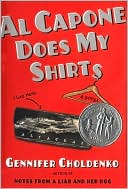
Module 10 - Al Capone Does My Shirts

Summary:

In 1935, Moose Flanagan and his family move to Alcatraz Island so that his austistic sister is given the opportunity to attend a progressive school in San Francisco.  When she is turned down for admission to the school, Moose asks a favor of the most famous and notorious inmate at Alcatraz, Al Capone, for help.

When Big Al grants this favor, it is Moose's turn to do a favor for Al Capone.  With the help of his school friends Moose has to figure out how to fulfill his favor for Al Capone and stay alive.  Set in 1935 the story has many facts about Alcatraz and life on the rock that makes this not only a great story, but believable as well.

Bibliography:

Choldenko, Gennifer.  "Al Capone Does My Shirts". Putnam: New York, 2004.

My Impressions:

I loved this book!  I think that the story line was great, but the use of real history, facts and pictures added to the writing and characters.  This book is great for young readers 10 years and older.  The writing is easy to read and makes a great read aloud book.

Reviews:

The Washington Post


Natalie's story is an important thread, sensitively handled. But what stays in the mind is the teeming mini-society of the island, where guards' families really did live and where a kid really might have encountered Al Capone, an inmate at Alcatraz from 1934 to 1939. — Elizabeth Ward

Publishers Weekly

In our Best Books citation, PW said of this tale set in 1935, "Choldenko captures the tense, nuanced family dynamics touched off by the narrator's sister's disability as skillfully as she handles the mystique of Alcatraz." Ages 10-up. (Apr.) Copyright 2006 Reed Business Information.
Della A. Yannuzzi - Children's Literature

Author Choldenko has written a funny and clever middle grade novel about a boy named Matthew (Moose) Flanagan who is living on Alcatraz Island with his family. The family has moved to the Island because Moose's father has found work as an electrician, and because his sister Natalie, who is autistic, can go to a good school nearby. Moose is not happy about living on the island, especially after meeting the Warden's daughter Piper who is bossy and a bit of a troublemaker. Moose's father has warned him to stay out of trouble because he needs this job and Natalie needs to go to the special school. Moose's life becomes miserable when Piper involves him and a few other island kids in a moneymaking scheme to have their schoolmates' clothes laundered by the convicts on Alcatraz Island. Piper tempts her school chums by claiming that Al Capone, the famous gangster, may even wash their shirts. The scheme falls apart when the Warden finds out what his daughter and friends are up to. Then, to make matters worse, the school that Natalie attends doesn't want her and she has to come home. Moose winds up watching her and has to forego his Monday after-school baseball game. This is an amusing book about interesting characters placed in a different and unlikely setting and trying to make the best of their situation. 2004, G. P. Putnam's Sons, Ages 10 up.


Suggested Uses:

1.  Use this story to bring history alive through the characters and have a reader do a report on the history of Alcatraz, Al Capone and escaping Alcatraz for a social studies lesson.

2. Research how much money people earned during that time period and the cost of food as compared today as part of a math lesson.

Book Cover:
Al Capone Does My Shirts by Gennifer Choldenko: Book Cover

Module 9 - The Body of Christopher Creed

Summary:

The Body of Christopher Creed is the story of a missing boy Christopher Creed and is narrated by Tory Adams a fellow student at the same school.  Christopher Creed was the total opposite of Tory Adams.  Tory is popular, cute, smart, well-to-do family, athlete and cheerleader girlfriend.  Tory's parents talk to him and they have a good relationship. 

Christopher Creed is picked on by Tory and other kids like him and when Christoper comes up missing and a note is found that leaves everyone wondering if he committed suicide or is a runaway, Tory begins to think about how he treated him and wants to try and find him.

With the help from his friend Ali and her boyfriend Bo Richardson, they try to piece together what happened to Christopher Creed and in the process they all discover things about themselves.


Bibliography:
Plum-Ucci, The Body of Christopher Creed. Volo Books: New York, 2000. ISBN 0786816411

My Impressions:

I found this book to be interesting because Tory Adams is narrating the story and he begins to look into himself for answers as to why he has treated Tory with insignificance.  His friends make jokes about Christopher Creed missing and make light of the fact he made of committed suicide.  Tory is trying to fit in with his friends, but doesn't feel the same the way they do.  This book is very interesting, but I had to follow it closely.

The ending was a little disappointing for me since I didn't get all the answers that I wanted.

Review:

Publishers Weekly


First-novelist Plum-Ucci wraps a well-crafted mystery around a topical issue: the effect teenage intolerance can have on misfits. When class freak Chris Creed suddenly disappears, his fellow students are not so much worried but abuzz with speculation: Is he a runaway, a suicide, a crime victim? Through a complicated but believable turn of events, narrator Torey Adams, a popular 16-year-old, starts to feel some concern and resolves to find the truth. His unlikely allies are two kids of dubious social status: Ali, who is Chris's neighbor, and Ali's boyfriend, Bo, a "boon" (shorthand for boondocks) with a juvenile record. Convinced Chris's mother is to blame for Chris's disappearance, they plan to break into his house to steal his hidden diary in hopes of finding evidence. The plan backfires: Bo is caught, Torey is implicated and all three are the subject of malicious gossip that proves to have dangerous consequences. Told as a flashback, the novel drags slightly at the beginning. Plum-Ucci, however, picks up the pace and builds to a fever pitch near the conclusion, vividly describing Torey's late-night hunt for Chris's body in a nearby Indian burial ground. Readers will likely be enthralled by the mystery, and, even more, they will be moved by Torey's hard-won realization that everyone deserves compassion. Ages 12-up. (May) Copyright 2000 Cahners Business Information.

Suggested Use:

This book would be good to use during a social studies class and in studying how others who are different can be hurt or left with feelings of inadequacy.  This would be a good choice for "anti-bullying" awareness conversation.


Cover Image

Friday, April 22, 2011

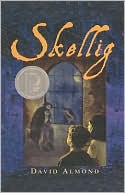
Module 8 - Skellig by David Almond

Summary:

This is the story of Michael  and his young friend Mina who lives across the street and is home schooled by her mother.  Michael and his family have recently moved to this house and while exploring the old dilapidated garage he meets Skellig.  Skellig survives on eating flys and the occasional chinese food and brown ale.

Michael and Mina befriend Skellig and move him from the garage to a house that is held in trust for Mina.  While there Skellig eats mice that the owls bring him and the food that is brought by Michael and Mina.

The secondary story is about Michael's premature baby sister who is in a constant struggle for her life.  At times Michael feels his sister's heartbeating in time with his and he prays that she will live.

As Skellig becomes stronger, both Michael and Mina realize that he is not as old as they thought he was and that indeed he is a young man with wings!  An angel? Maybe, but Michael knows that he can help his sister.

Skellig, is a good book to read on rainy days and nights.  It takes you to the dilapidated garage, to an empty house and into the world of Michael and Mina and their day to day lives.

Overall, the setting of the book is dark in subject and setting, but it has a light at the end of the story that leaves the reader satisfied that events happen in the order that they should.


Bibliography:

Almond, David. "Skellig". Laurel Leaf: England. 2001.

Suggested Use:
I suggest this book to middle school and high school readers for the theme of the magical and intense in nature.


Skellig by David Almond: Book Cover

Monday, February 14, 2011

Module 2 - Justin Morgan Had a Horse

Summary:

Justin Morgan Had a Horse by Marguarite Henry is the story of Lil' Bub the beginning of the Morgan Horse.  This chapter book is set back in early America and is a solid read of early American life.  The theme of the story is of a small horse who is considered to be a runt and turns into a breed of horse that is wanted for the power in his strength. 

Bibliography:

Henry, Marguarite, Justin Morgan Had a Horse, (Simon & Schuster Children's Publishing, 1945), 176 pages

My Impressions:

I enjoyed this book for the language used was more proper and gentler.  The story was interesting and had historical value as far as how people traveled and lived.  Good for children 9 and up.

 Review:

Book Review – “Justin Morgan Had A Horse” – by Marguerite Henry

A childhood favorite re-visited.
Is the story as good as I remember? – Yes
What ages would I recommend it too? – All ages. Children will enjoy the single storyline; while adults enjoy an easy afternoon read (especially while waiting on a bus, show, doctor, or other appointments).
Length? – Reasonable for an afternoon.
Characters? – Memorable, and few enough that you won’t forget who is who.
Setting? – Real world, even includes President James Monroe.
Written approximately? – 1954.
Does the story leave questions in the readers mind? – Yes! By the end Joel is an adult, yet he still seems to be written about as a kid with no family relationships. Did he marry? Did he speak to either of his parents again? Is this to keep characters down? What really happened to this very real character? What happens to the horse after his return. How long did the horse live?
Any issues the author (or more recent publisher) should cover? – Yes. At one point Joel attempts to buy his horse back with $5.00. How much would that $5.00 be today? What about the $25.00 he does eventually buy the horse back for, how much is that worth today? (I can just imagine a kid reading this and asking their parent to go buy them a horse for $5.00.)Suggested Use:


Suggested Use:
I would use this book in a social studies area on the history of America. The use of language, living styles, and general cultural differences from today's world is a good concept to outline the evolution of American life.

Book Cover:

Front Cover

Module 2 - Are You There God? It's Me, Margaret.

Summary
The story is about Margaret and her new friends that she is making after moving to the suburbs.  Margaret is dealing with a lot of teenage angst, she has started menustration, bought her first bra and has found the most handsome boy that she has yet to meet.  On top of all that, she is trying to understand religion and what she believes in.  She doesn't really pray to God, but talks to him about what is going on in her life and what she wants.

All the emotions that teenage girls must face and with new friends can cause a little bit of anxiety in the best of us.

Citation:  Blume, Judy. "Are You There God? It's me, Margaret". New York: Yearling, 1970.

My Impressions
Judy Blume wrote this book around 1970 and I find that for the time it was written it was considered to be a little outside the box.  The story is about a young girl, Margaret, moving from the city out to the suburbs and trying to find her way through growing up and making new friends. 

Reviews:

Are You There God? It's Me, Margaret (1970), by Judy Blume

By Lev Grossman Sunday, Oct. 16, 2005 BACKNEXT7 of 113PrintEmailDigg FacebookTwitterMORE

You could almost hear the collective generational sigh of relief in 1970 when Blume published this groundbreaking, taboo-trampling young adult novel: finally, a book that talks frankly about sex without being prim or prurient, and about religion without scolding or condescending. A few months shy of her 12th birthday, Margaret Simon is starting school in a new town and asking God some serious questions. Like, when is she going to get her period? What bra should she buy? And if her mom is Jewish and her dad is Christian, is she supposed to join the Y or the Jewish Community Center? Blume turned millions of pre-teens into readers. She did it by asking the right questions—and avoiding pat, easy answers

By Common Sense Media:

ARE YOU THERE GOD, IT'S ME MARGARET was first published in 1970, but tweens will find that it still it pretty much rings true today (especially since this updated version has the girls using pads instead of sanitary belts to deal with their first periods). Margaret is such a relatable character -- she worries about being normal, sometimes says the wrong thing, and even hides her true feelings to be accepted by her friends. Readers will appreciate her honest narration -- which will make them feel a whole lot better about that their own anxieties about growing up.

Library Uses:

Beginning of school I would set up a display for young girls that includes coming of age books.  With a focus on writers who celebrate being young.

Book Cover: